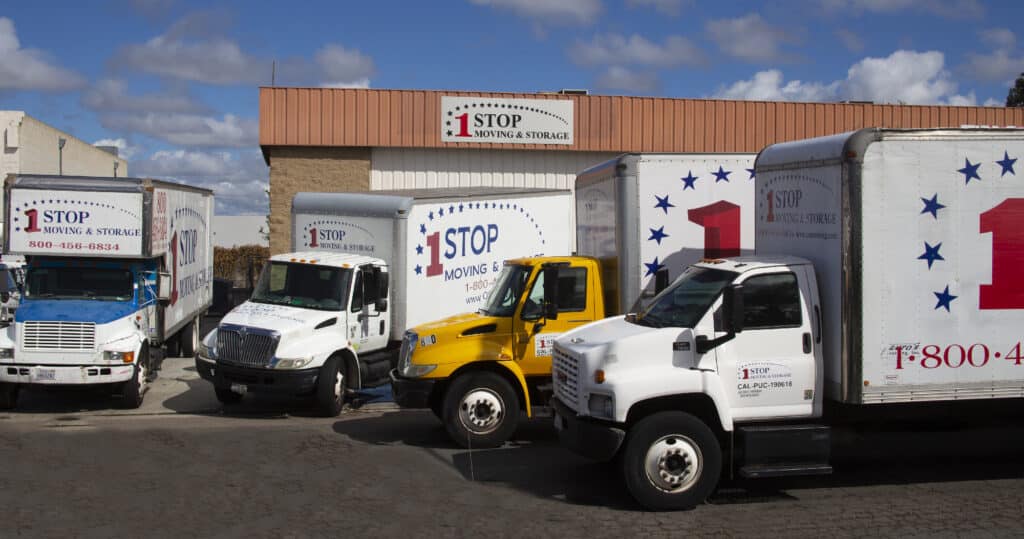
Short-term storage during a move is included when you book with One Stop Moving, so a gap between homes does not mean renting a separate unit or loading a truck twice. That gap is exactly where moving budgets fall apart: escrow slips a week, a lease starts late, and suddenly your belongings need somewhere to sit while you pay for a hotel. One Stop Moving is a San Diego moving and storage company in business since 2008, licensed under CAL-190616, and this guide covers the storage options available mid-move, what each costs, and how to pick between climate-controlled vault storage and portable container storage.
What Storage Options Are Available During a San Diego Move?
You have two practical options for storage during a move in San Diego: vaulted warehouse storage, which is climate-controlled, and portable storage containers. Both are handled by the same company that runs your move, which is what keeps the handoff simple.
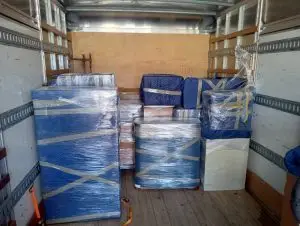
Vaulted storage means your belongings are packed into sealed wooden vaults inside a secure warehouse — nothing is unloaded onto open shelving, and nothing is mixed with another customer’s items. Every vault is climate-controlled and humidity-controlled at 68–72°F, which protects pieces that inland heat would damage. Portable containers flip the model: the container comes to your driveway, you load it on your schedule, and it is stored until you call for delivery at the new address. One Stop Moving offers all three through its storage services, along with commercial, vehicle, and equipment storage for less common situations.
How Much Does Storage During a Move Cost in San Diego?
Short-term storage during a move is included with your booking at One Stop Moving — if your move-out and move-in dates do not line up, the interim storage does not add a separate line item. Monthly storage beyond the short-term window is quoted based on volume and duration.
The moving side of the equation stays the same whether storage is involved or not: local moves run $139 per hour for two movers and a truck, with each additional mover at $50 per hour. Billing works in 15-minute increments, so a crew that finishes in 4 hours and 15 minutes bills for 4 hours and 15 minutes, not 5 hours. A deposit holds your date. Every move includes 50 free boxes plus wardrobe boxes, moving blankets, padding, and door and floor protectors at no charge, and stairs never carry a surcharge at either end — worth knowing if the storage stop happens between a third-floor walk-up and a new place with steps.
When Do You Need Storage Between Homes?
You need storage between homes whenever your move-out date lands before your move-in date, which happens in roughly three situations: escrow delays on a purchase, a gap between lease end and lease start, and renovations that push back your ready date. In San Diego’s competitive housing market, these gaps are common, and most run one to three weeks.
The mistake is treating the gap as a crisis instead of a plan. Decided in advance, a storage stop simply means the crew loads once, the vault holds your things, and delivery is scheduled when your keys are ready. Decided on moving day, it means scrambling for a self-storage unit, renting a second truck, and paying an hourly crew to load everything twice. Booking rules are the same as any move: reserve at least 10 days ahead, or three weeks ahead during the May-to-September peak. If escrow firms up early, call to move the date, and ask about rescheduling and cancellation terms when you book.
Should You Choose Vault Storage or a Portable Container?
Choose climate-controlled vault storage for a short gap or for wood furniture, artwork, records, or electronics, and a portable container when you want to pack at your own pace. The right answer depends on what you own and how much control you want over the timeline.
Vaulted storage suits most one-to-three-week gaps: sealed vaults, secure warehouse, no re-handling until delivery. Climate control earns its keep in summer, when an unconditioned warehouse or container in an inland zone like Escondido or El Cajon can hit temperatures that warp veneer and delaminate photographs. Portable containers work best when the dates are truly uncertain — portable storage containers are delivered to your driveway, you load them yourself, and storage runs until you schedule redelivery. Containers are steel and weather-sealed but not climate-controlled, so heat-sensitive pieces belong in a vault. If packing is the bottleneck rather than the dates, professional packing is billed at the same crew hourly rates as the move, with boxes and materials sold by the piece.
How Does Storage Fit Into Your Moving Timeline?
Storage adds one decision to your timeline, not one week: you set the delivery-out date when your new home is ready, and everything else stays on the standard schedule. The load day proceeds exactly like a normal move — the difference is where the truck goes afterward.
A typical sequence looks like this. Book 10 days out, or three weeks out in peak season. The crew arrives with a lift-gate truck, loads in one pass, and transports everything to storage the same day. Your belongings sit in the vault while escrow closes or the lease starts. When you have keys, you schedule delivery — One Stop Moving operates seven days a week from 7AM to 7PM, so a Saturday delivery is a normal booking rather than a special request. A free on-site quote before any commitment settles the volume estimate, which is what determines how many vaults the job needs. If the gap stretches past the short-term window, monthly storage is quoted before the meter starts, not after.
Why Use One Stop Moving for Storage During Your Move?
One company handling the move and the storage means one crew, one contract, and one point of accountability — nothing gets lost in a handoff between a mover and a separate storage facility. One Stop Moving has run moving and storage in San Diego since 2008.
The specifics behind that: licensed under CAL-190616 with the California Bureau of Household Goods and Services and USDOT #1956864 for interstate work, carrying $1 million in general liability insurance plus $1 million in workers’ compensation. Crews are full-time, professionally trained employees — not day laborers hired for the day, which matters twice when the same items are handled at load and at delivery weeks apart. The 98% customer return rate is the number that says the storage handoff works. Billing stays in 15-minute increments, stairs never cost extra, and trucks arrive lift-gate equipped and ready.
Frequently Asked Questions
Is storage included when I move with One Stop Moving?
Yes. Short-term storage during a move is included with your booking, so a gap between move-out and move-in does not add a separate storage charge. Monthly storage beyond the short-term window is quoted based on volume and duration.
How much does a local move with storage cost in San Diego?
The moving rate is $139 per hour for two movers and a truck, plus $50 per hour for each additional mover, billed in 15-minute increments. Short-term storage during the move is included.
What is vaulted storage?
Vaulted storage means your belongings are packed into sealed wooden vaults inside a secure warehouse. Your items are never mixed with another customer’s and are not re-handled until delivery.
Do I need climate-controlled storage in San Diego?
For wood furniture, artwork, photographs, records, and electronics stored over the summer, climate control is worth requesting — inland warehouse temperatures can damage these items. Every One Stop Moving vault is climate-controlled and humidity-controlled at 68–72°F, so a vault covers these items; portable containers are not climate-controlled.
How far in advance should I book a move with storage?
Book at least 10 days ahead, and three weeks ahead for moves between May and September. Ask about rescheduling and cancellation terms when you book.
Or call (858) 633-8600 — available seven days a week, 7AM to 7PM.
Related reading: