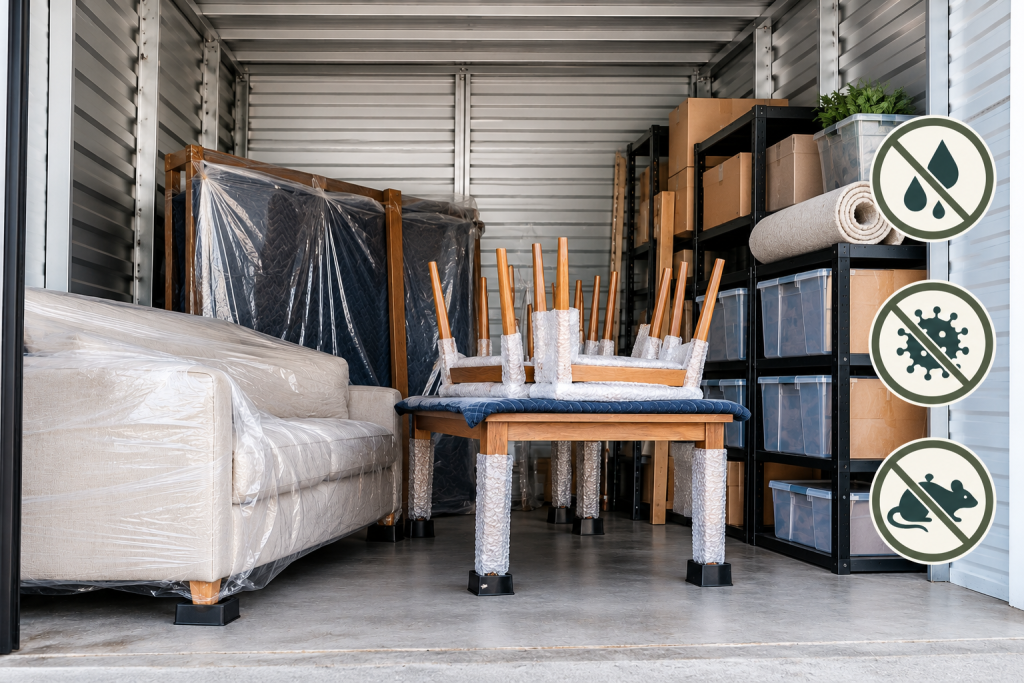
To store furniture long term, clean it, take apart anything that comes apart, and cover it in breathable moving blankets or cotton sheets, not tight plastic. Then keep it off the floor and away from the walls, in a space where the temperature and humidity stay steady. Most furniture damage in storage comes from damp, heat, pests and weight pressing on the wrong spot. Get those four right and furniture can come out years later looking the way it went in.
At One Stop Moving & Storage, we’ve stored furniture for San Diego County households since 2008, in climate-controlled vaults at our Sorrento Valley facility. Our crews wrap, pick up and store furniture every week, so this is the checklist we work from, whether you’re doing it yourself or letting us handle it.
How do you prepare furniture for long-term storage?
Clean it, dry it, take it apart and protect the weak spots. Work through each piece in this order:
- Clean everything. Vacuum upholstery and under cushions, and wipe wood, metal and glass. Crumbs and dust attract pests, and grime left on a finish can mark it over the months.
- Let it dry completely. Anything that goes into storage damp, even from cleaning, can grow mildew. Give upholstery a full day.
- Treat wood and leather. A coat of furniture wax or polish on wood, and leather conditioner on leather, help both stand up to dry or damp air.
- Take apart what comes apart. Remove table legs, bed frames, shelves and mirrors from dressers. Put the screws and bolts in a labeled bag and tape it to the piece it belongs to.
- Protect the corners and glass. Wrap glass tops and mirrors separately, and use corner protectors or cardboard on sharp wood edges.
- Take photos. A quick photo of each piece before it’s wrapped records its condition. It also helps you put things back together.
Should you wrap furniture in plastic for storage?
Not wood, leather or fabric, at least not tightly for months. Plastic stretch wrap traps moisture against the surface, and that’s how stored furniture gets mildew, a cloudy finish or a musty smell. Use moving blankets, cotton sheets or breathable furniture covers instead. Plastic is fine for short trips on the truck, and a sealed plastic mattress bag is the usual exception (see below). At One Stop, our crew blanket-wraps furniture and labels it by room before it goes into storage.
How do you store a couch in storage?
Store it upright on its feet, the way it sits in a living room, with nothing heavy stacked on the cushions. Vacuum it, take off the legs if they unscrew, and store the cushions on the couch or beside it in a clean bag. Cover it with a breathable sheet or blanket. If you have to stand a couch on its end to save space, keep it there only for a short stay and pad the arm it rests on, because the frame isn’t built to carry its weight that way for months. Leather couches need a coat of conditioner first and no plastic against the leather.
How do you store a mattress long term?
Put it in a sealed mattress bag and store it flat. A bag keeps out dust, moisture and pests. Lying flat keeps the springs and padding from shifting and sagging, and nothing heavy should go on top. If you can’t store it flat, stand it upright on its long side against a wall, never folded or bent. Our crews bring mattress bags and pad and bundle bed frames, so the frame and its hardware stay together.
How do you protect wood and leather furniture in storage?
Keep them away from big swings in temperature and humidity, and let them breathe. Wood swells in damp air and shrinks in dry air. Over a few seasons, that cracks joints, lifts veneer and warps tabletops. Leather dries and cracks in heat, and grows mildew in damp air. A steady temperature and humidity protect both better than any cover. Near the San Diego coast, the main risk is damp air from the marine layer. Inland, it’s summer heat.
Every One Stop vault is temperature- and humidity-controlled at 68°F to 72°F, and climate control is included in the price. Our guide to whether climate-controlled storage is worth it explains which furniture needs it.
How should you place furniture inside a storage unit?
Off the floor, away from the walls, with the heaviest pieces at the bottom:
- Put pallets, boards or a plastic sheet under everything, so nothing sits on bare concrete, which can draw moisture up.
- Leave a few inches between furniture and the walls so air can move.
- Put sofas and dressers in first, at the back, and lighter pieces on top of solid surfaces only, never on cushions or glass.
- Stand tabletops and mirrors on their edges, padded, rather than lying them flat under other things.
- Leave a narrow path down the middle, so you can reach things without climbing over them.
Is it safe to store furniture in a garage in San Diego?
For a few weeks, usually. For months, it’s risky for wood, leather, upholstery and anything with electronics inside. San Diego garages rarely freeze, so cold isn’t the problem. They take on damp air near the coast and get very hot inland in summer, and they’re open to dust, insects and rodents every time the door goes up. If a garage is your only option, keep everything off the floor, cover it with breathable sheets, and check on it every month or so.
How do you keep mice and pests out of stored furniture?
Store furniture clean, with no food and nothing edible nearby, and keep fabric off the floor. Crumbs in a couch, a forgotten bag of pet food or a box of paper on bare concrete is what draws mice and insects in. Vacuum and wipe every piece before storing it, use sealed plastic bins rather than cardboard for linens and clothes, and check a self-storage unit every month or two. A clean, monitored facility with controlled access does a lot of this for you.
How long can you keep furniture in storage?
For years, if it’s prepared well and kept in steady conditions. Damp, heat, pests and pressure do the damage, not time. If you aren’t sure how long you’ll store, plan for longer than you expect and choose climate-controlled storage from the start. Moving everything partway through costs more than starting in the right place.
How much does it cost to store furniture in San Diego?
At One Stop, storage units start at $245 a month for a 5×10 in San Diego County, and a 10×10, which usually holds about a one-bedroom home, is $355. Loading into storage is $750 per truck, and each access visit is $75. Billing is monthly and not prorated. We size the space with you during the estimate, so you don’t pay for room you won’t fill. Basic protection is included and pays 60 cents per pound per article under California’s tariff, so ask about added coverage for valuable pieces. See all our storage prices.
If storage is part of a move, our guide to storage during a move in San Diego explains how that works. For something you’ll load yourself, our portable storage containers are $99 or $175 a month, but they aren’t climate-controlled, so they suit shorter stays and sturdier furniture.
Should you store it yourself or use full-service storage?
Store it yourself if you’re close to a unit, have help lifting, and want to visit often. Use full-service storage if you’d rather not rent a truck, or carry a sofa twice. With One Stop, our crew wraps your furniture, picks it up at your door, records it in a photo inventory, stores it in a climate-controlled vault, and brings it to your new address when you’re ready. Our guide to self storage vs. full-service storage compares the two side by side.
Furniture storage in San Diego with One Stop
One Stop Moving & Storage picks up furniture across San Diego County and stores it in climate-controlled vaults at 6260 Marindustry Dr in Sorrento Valley. We’re a licensed California mover (CAL-190616). Start with our furniture storage in San Diego page, call (858) 633-8600, or get a free storage quote.
Frequently asked questions
Clean it, take it apart, wrap it in breathable blankets or sheets rather than plastic, and keep it off the floor and away from the walls. Store it somewhere with a steady temperature and humidity.
Not tightly, and not for months. Plastic traps moisture against wood, leather and fabric, which causes mildew and finish damage. Use moving blankets or cotton covers. A sealed bag is fine for a mattress.
In a sealed mattress bag, lying flat, with nothing heavy on top. If it has to stand, keep it upright on its long side, never folded.
For a few weeks, usually. For months, a San Diego garage is often too damp near the coast or too hot inland, and pests get in easily. Keep everything off the floor and check on it often.
At One Stop, storage units start at $245 a month for a 5×10 in San Diego County, and a 10×10 (about a one-bedroom home) is $355, plus $750 per truck to load it in.